

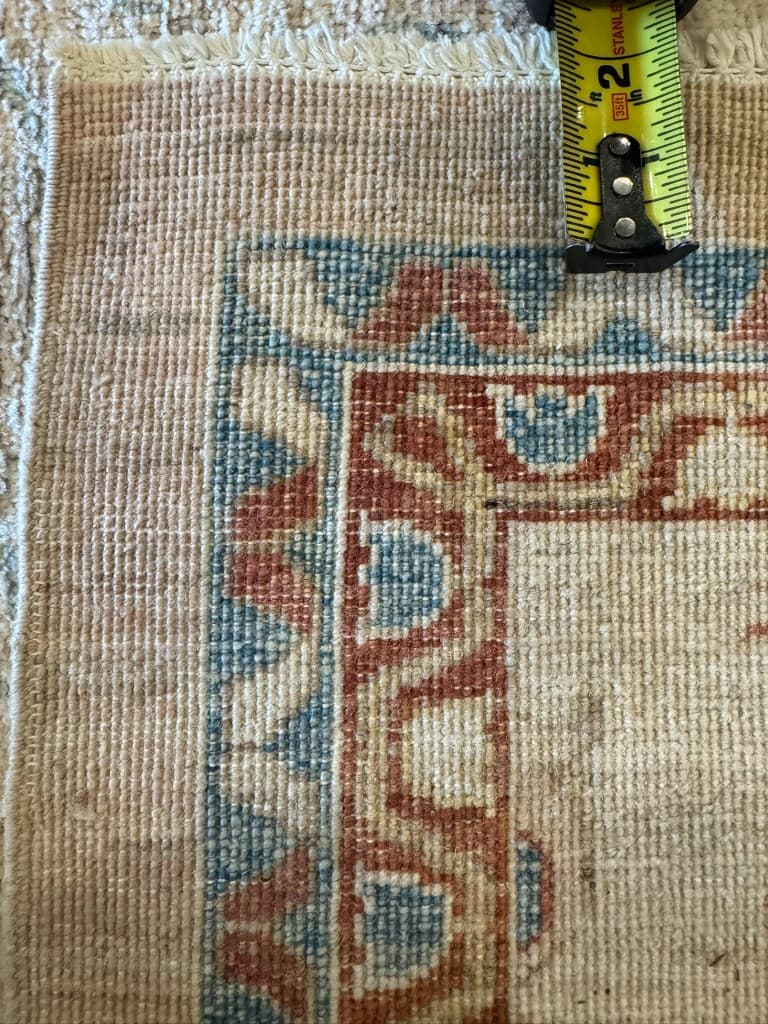
A genuine hand-knotted rug can take months, sometimes years, to weave, and it can last for generations when cared for properly. But with so many machine-made imitations on the market, how can you tell the difference before you buy?
At Bijar Oriental Rugs, we've spent years sourcing and restoring authentic hand-knotted pieces, and we know exactly what to look for. Here are seven ways to tell a handmade rug from a machine-made one.
1. Check the Back of the Rug
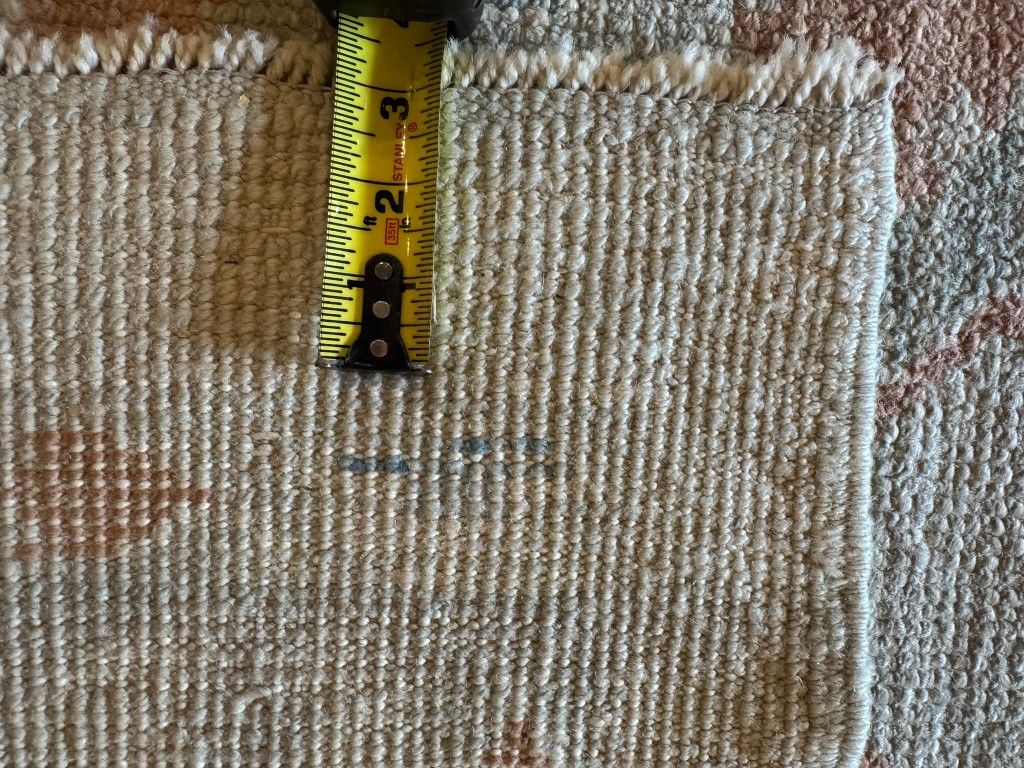
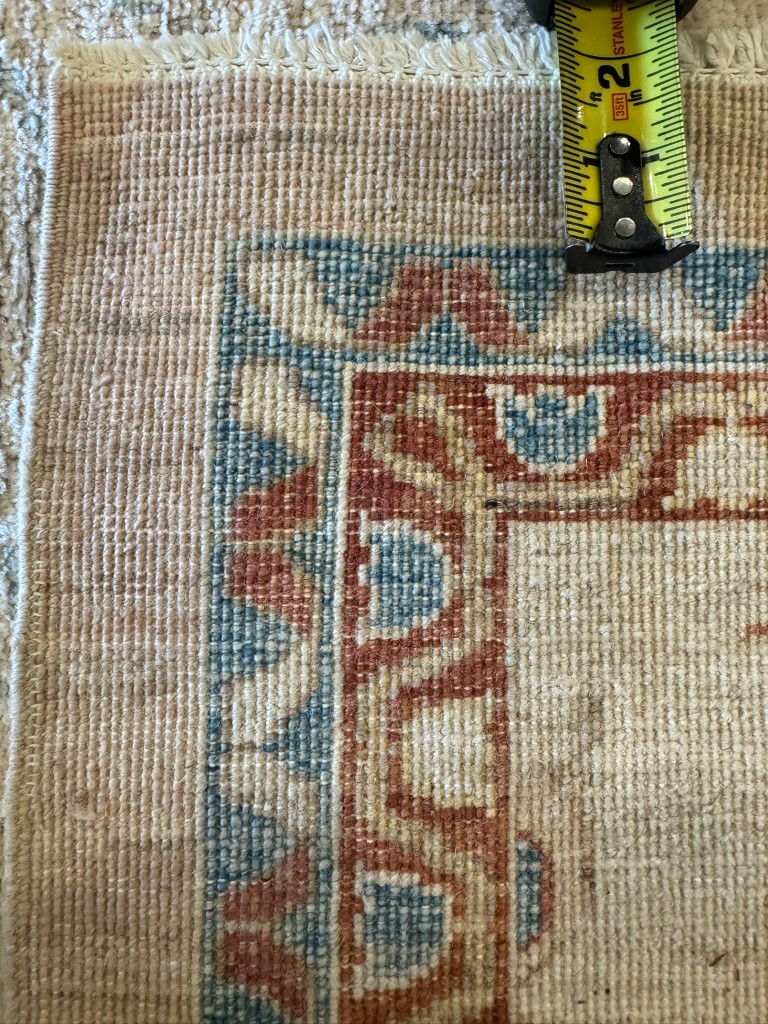
This is the single most reliable test. Flip the rug over.
- Handmade: The pattern on the back is just as clear and detailed as the front, because each knot is tied individually. You'll see the same design, slightly softened. As shown above, you can even measure knot density directly off the back.
- Machine-made: The back looks blurry, uniform, or shows a mesh/backing material glued or woven in. Machine-made rugs are often produced with a canvas or latex backing to hold tufts in place.
2. Look for Slight Irregularities
Hand-knotted rugs are woven by artisans, not robots, and that's exactly the point.
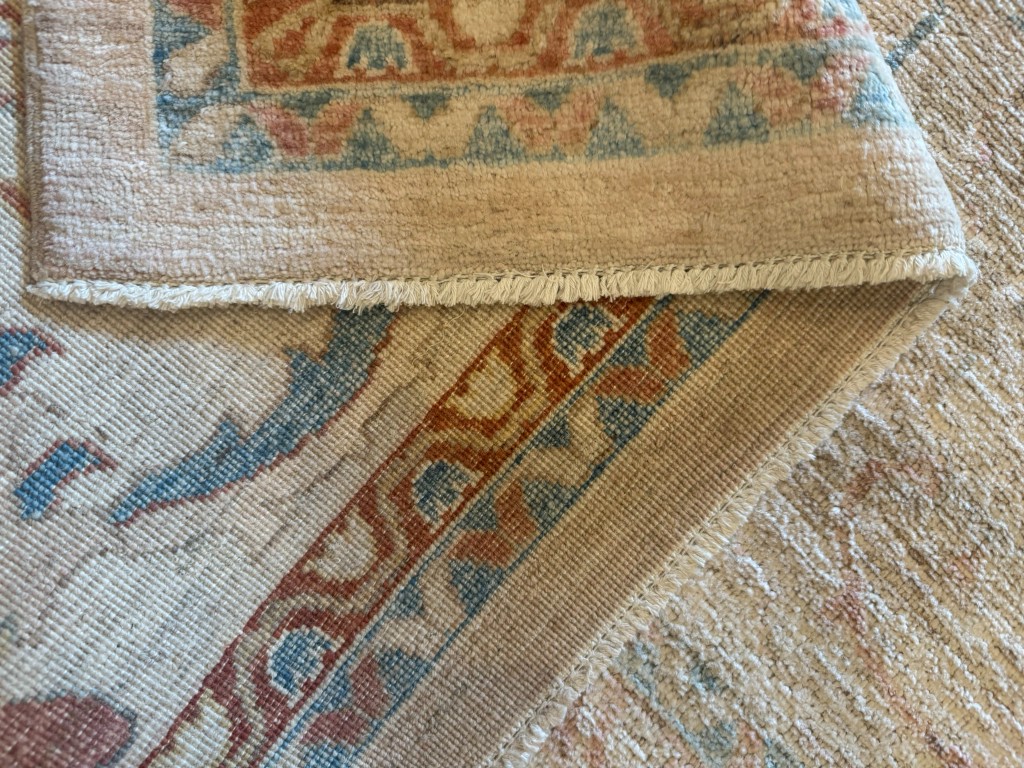
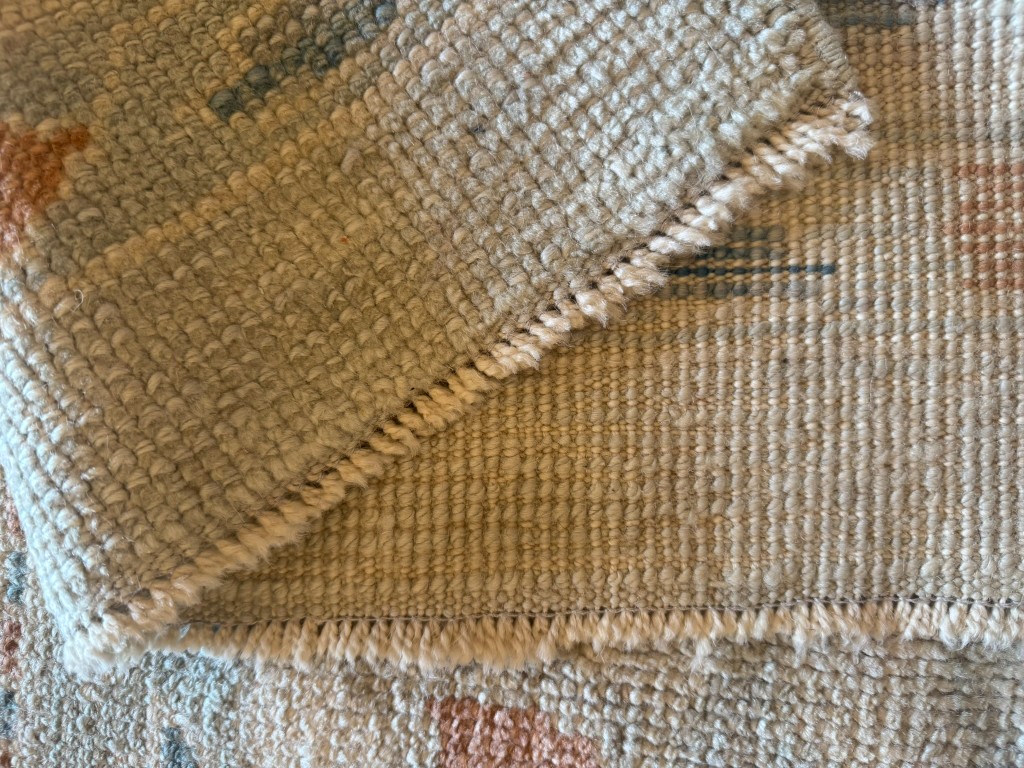
- Handmade: Look closely at the border and pattern repeats. You'll usually find small variations: a slightly asymmetrical medallion, a color that shifts subtly from one dye lot to the next, a border that isn't perfectly even.
- Machine-made: The pattern is identical and perfectly symmetrical everywhere, because it's produced by a computer-controlled loom.
Counterintuitively, tiny "imperfections" are a mark of authenticity, not a flaw.
3. Examine the Fringe
- Handmade: The fringe is an extension of the rug's foundation (the warp threads). It emerges naturally from the body of the rug.
- Machine-made: The fringe is often sewn on separately as a decorative trim, and it can usually be removed without unraveling the rug itself. Try gently checking where the fringe meets the body. If it looks stitched on as an afterthought, that's a red flag.
4. Count the Knots
Hand-knotted rugs typically have a much higher knot density than tufted or machine-made rugs, though this varies by region and style (a Persian Bijar or Tabriz, for instance, is prized for its exceptionally fine, dense weave).
- Turn the rug over and count the knots within one square inch.
- Handmade rugs often range from 80 to over 300+ knots per square inch (KPSI), depending on the origin.
- Machine-made rugs don't use knots at all. The "knots" you may see printed on the surface are just part of the printed or tufted pattern.
5. Feel the Material
Run your hand across the pile.
- Handmade: Usually wool, silk, or a wool-silk blend, with a slightly uneven, natural texture and a warm, matte sheen.
- Machine-made: Often synthetic fibers like polypropylene or nylon, which tend to feel more uniform, slightly plasticky, and shinier under light.
6. Ask About Origin and Provenance
A reputable dealer should be able to tell you:
- The region or city the rug comes from (e.g., Bijar, Heriz, Tabriz, Kashan)
- Roughly how old it is and its materials
- Whether it's hand-knotted, hand-tufted, or machine-made (these are not the same thing. Hand-tufted rugs are made faster with a tufting gun and are generally less durable and less valuable than hand-knotted pieces)
If a seller can't answer these questions, or the label simply says "wool rug" with no further detail, be cautious.
7. Consider the Price
Authentic hand-knotted rugs require significant time and skilled labor, so they are priced accordingly. A large, finely knotted rug that seems too cheap to be true usually is. This doesn't mean every expensive rug is authentic, but a suspiciously low price on a rug marketed as "hand-knotted Persian" is worth investigating further.
Why It Matters
Beyond authenticity for its own sake, hand-knotted rugs typically:
- Last much longer, often 50-100+ years with proper care, versus a decade or less for many machine-made rugs
- Hold or increase in value over time, especially rare or antique pieces
- Can be professionally cleaned, repaired, and restored, unlike most machine-made rugs
Still Not Sure?
If you have a rug at home and aren't sure whether it's handmade, bring it in or send us a few photos: front, back, and a close-up of the fringe. Our team at Bijar Oriental Rugs can help you identify its origin, materials, and value, and advise on proper cleaning or restoration.
Looking to add an authentic hand-knotted rug to your home? Browse our current collection or book a showroom visit to see and feel the difference for yourself.